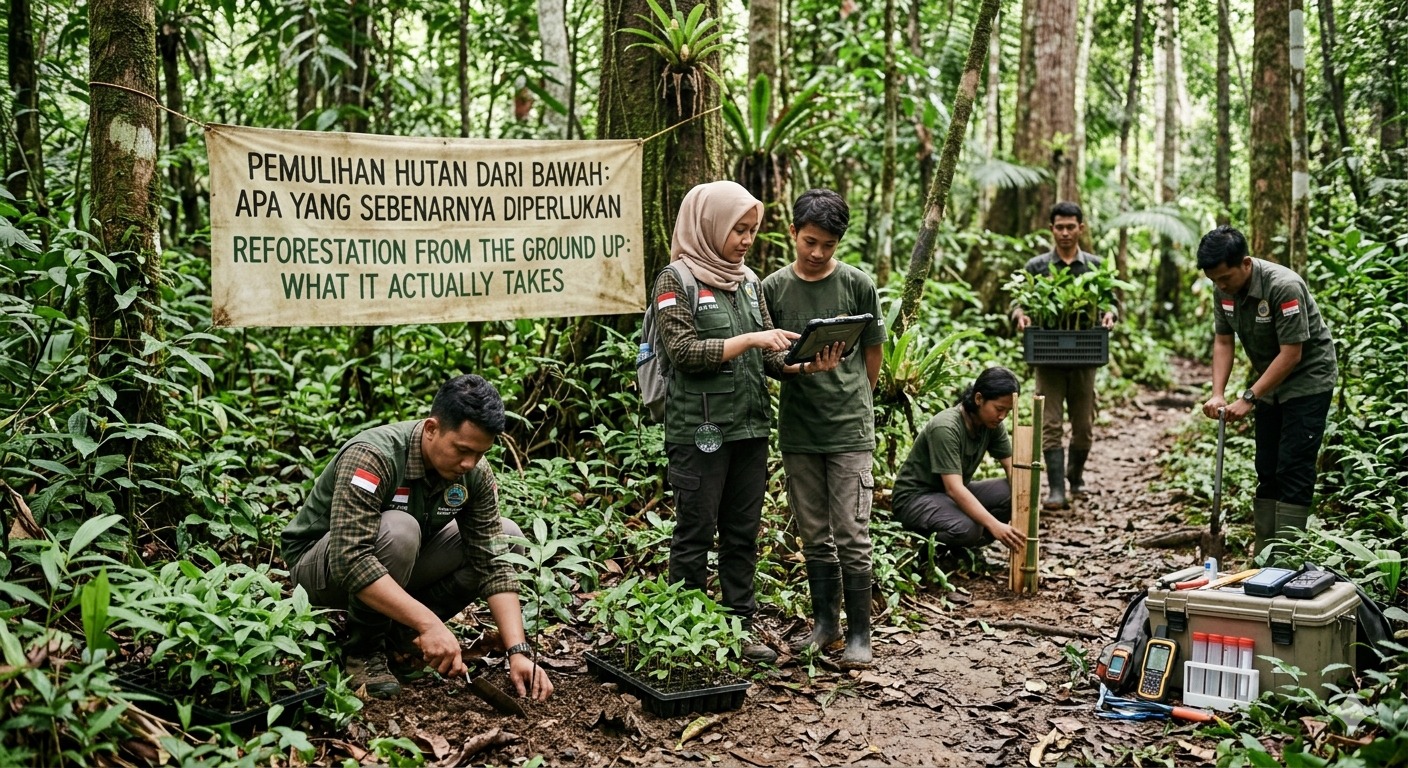
When we report that Yayasan KEL has planted 12,000 trees in the Leuser buffer zone, the number can feel abstract. A tree is a seed, a sapling, a hole in the ground. But behind each of those 12,000 plantings is a sequence of decisions, preparations, and relationships that determines whether the tree survives — and whether it becomes part of a functioning forest or a well-intentioned failure.
This is what reforestation actually looks like on the ground.
It Starts With the Soil
Before a single seedling goes into the ground, we assess the soil. Degraded land in Leuser's buffer zone has typically been used for smallholder agriculture — often rubber or oil palm — for years or decades. The topsoil may be compacted, depleted of organic matter, and colonised by invasive grass species like Imperata cylindrica (alang-alang), which actively suppresses the germination of native species through allelopathic compounds it releases into the soil.
Clearing alang-alang is labour-intensive and must be done carefully. Mechanical clearing without follow-up planting simply creates conditions for re-invasion. Our teams use a combination of manual clearing and strategic mulching to suppress the grass while improving soil organic content. In severely degraded patches, we plant pioneer species first — fast-growing native trees that provide shade, improve soil structure, and create the microclimate conditions that allow slower-growing climax species to establish.
Species Selection Is Everything
A reforestation project that plants the wrong species is worse than no project at all. Monoculture planting — even of native species — does not produce a functioning ecosystem. It produces a tree farm. Our species selection process begins with a floristic survey of intact forest adjacent to the restoration site, identifying which species naturally occur in that forest type and at that elevation.
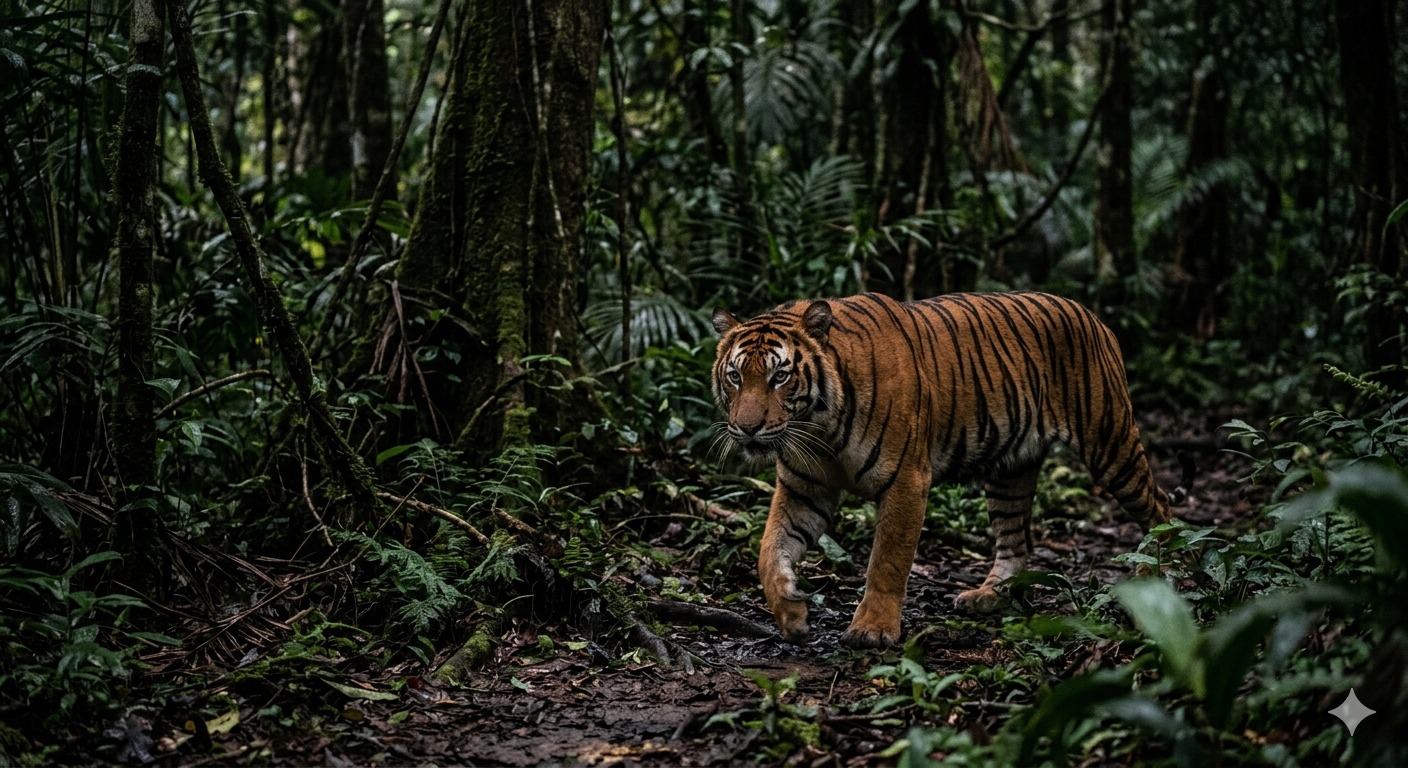
For our Takengon highland sites, this means prioritising species from the families Dipterocarpaceae, Lauraceae, and Moraceae — the backbone of Sumatran hill forest. We also include fruiting species of specific importance to the megafauna we are trying to support: Artocarpus species (breadfruit relatives) favoured by orangutans, Ficus species whose fruit is consumed by hornbills, civets, and primates alike, and understorey species that provide browse for deer and tapir.
All seedlings are raised in our community nurseries — an intentional choice. Nursery production engages local households in the planting program from its earliest stage, builds capacity for ongoing replanting, and ensures that the genetic material we use comes from seed collected within the local landscape rather than from distant sources with different adaptations.
Timing the Monsoon
Planting windows in Aceh are determined by rainfall. Seedlings transplanted into dry ground during the dry season face mortality rates that can exceed 60%. We time our major planting operations to coincide with the onset of the wet season — typically November to January for our highland sites — when soil moisture is sufficient to support establishment without irrigation.
This creates a narrow operational window and requires significant logistical preparation: seedlings of the right age and size must be ready in the nursery at exactly the right moment, transport to planting sites must be arranged, and community planting teams must be mobilised. A delayed monsoon can compress the entire planting season into a matter of weeks.
Monitoring That Actually Means Something
One of the most common failures in reforestation programs is inadequate post-planting monitoring. Trees are planted, photographs are taken, reports are filed — and then nothing. Without follow-up, there is no way to know whether the plantings survived, whether they are growing at expected rates, or whether they are actually contributing to the restoration of the ecosystem they were meant to rebuild.
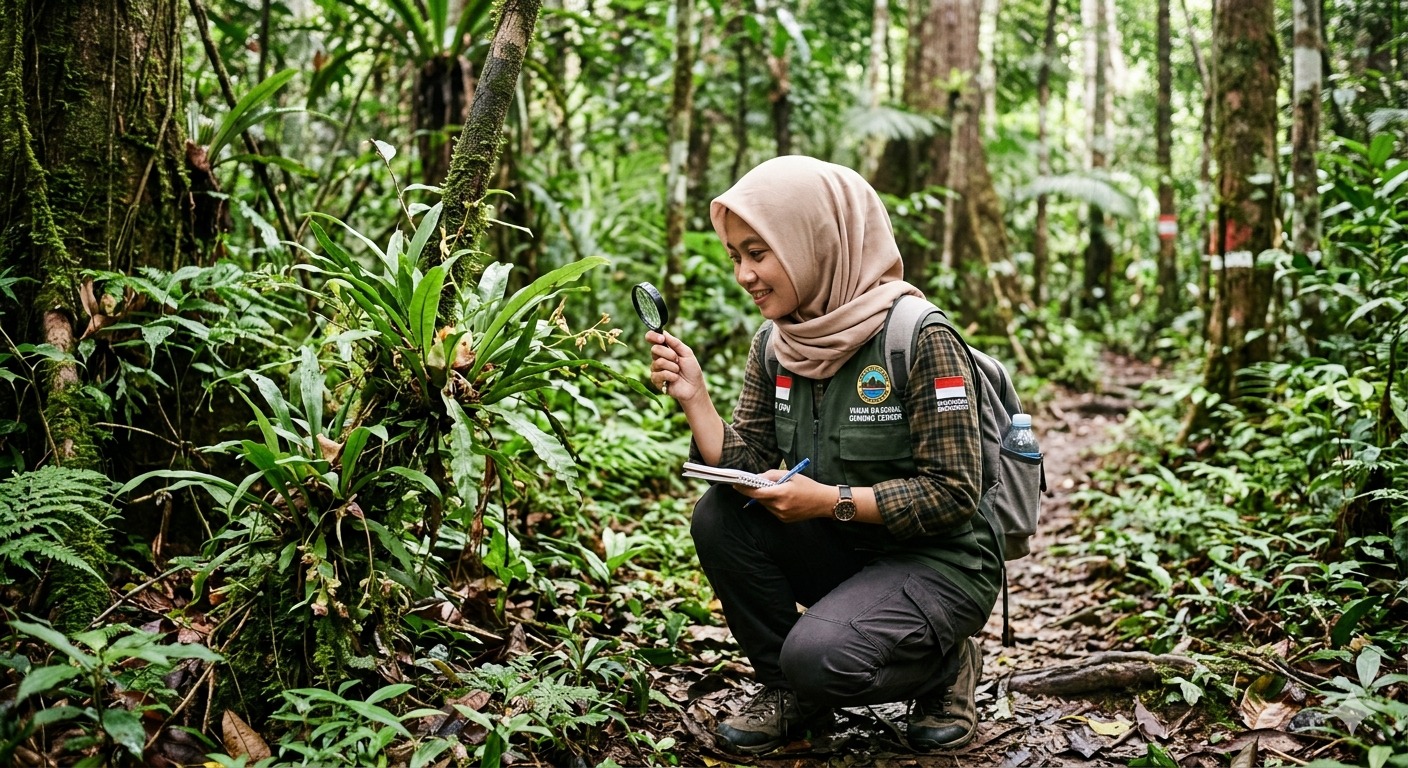
Yayasan KEL monitors each planting site at 3-month, 12-month, and 24-month intervals. We track survival rates by species and by microhabitat, record canopy height and crown diameter, document natural recruitment of additional native species under the planted canopy (a key indicator of ecosystem recovery), and assess the presence of wildlife using camera traps placed at restoration sites.
Our current survival rate across all planting sites is 74% at 12 months — above the industry benchmark of 70%, but not yet where we want it to be. Analysis of mortality patterns shows that the highest losses occur in patches where alang-alang regrowth was not adequately suppressed in the first six months after planting. This finding has directly shaped our protocol: we now schedule weeding visits at weeks 8, 16, and 24 post-planting for all sites where alang-alang was present at baseline.
The Part Nobody Photographs
The unglamorous reality of reforestation is that most of the work happens in the months and years after the planting day that generates the photographs and press releases. Weeding, replanting dead seedlings, monitoring for pest and disease outbreaks, managing boundary incursions — this is the work that determines whether a restoration project becomes a forest or a field of dead stumps.
It requires sustained funding, sustained community engagement, and a willingness to document and learn from failure rather than simply celebrating success. At Yayasan KEL, we publish our monitoring data — including our mortality rates and the problems we encounter — because we believe that honest reporting is the only way to improve, and because the donors and partners who support this work deserve to know what their investment is actually achieving.
Twelve thousand trees. Behind each one: soil tests, nursery days, community meetings, monsoon calculations, and years of follow-up. That is what the number means.