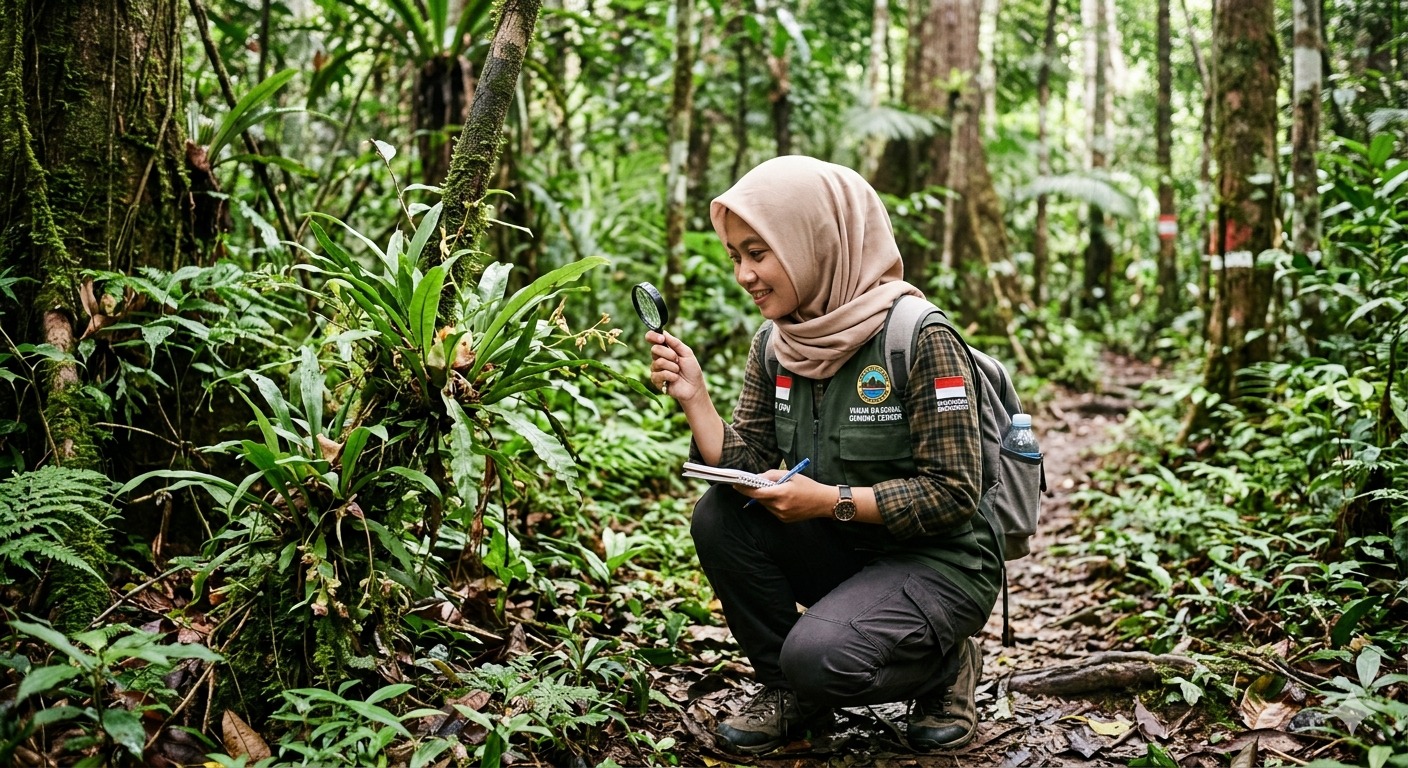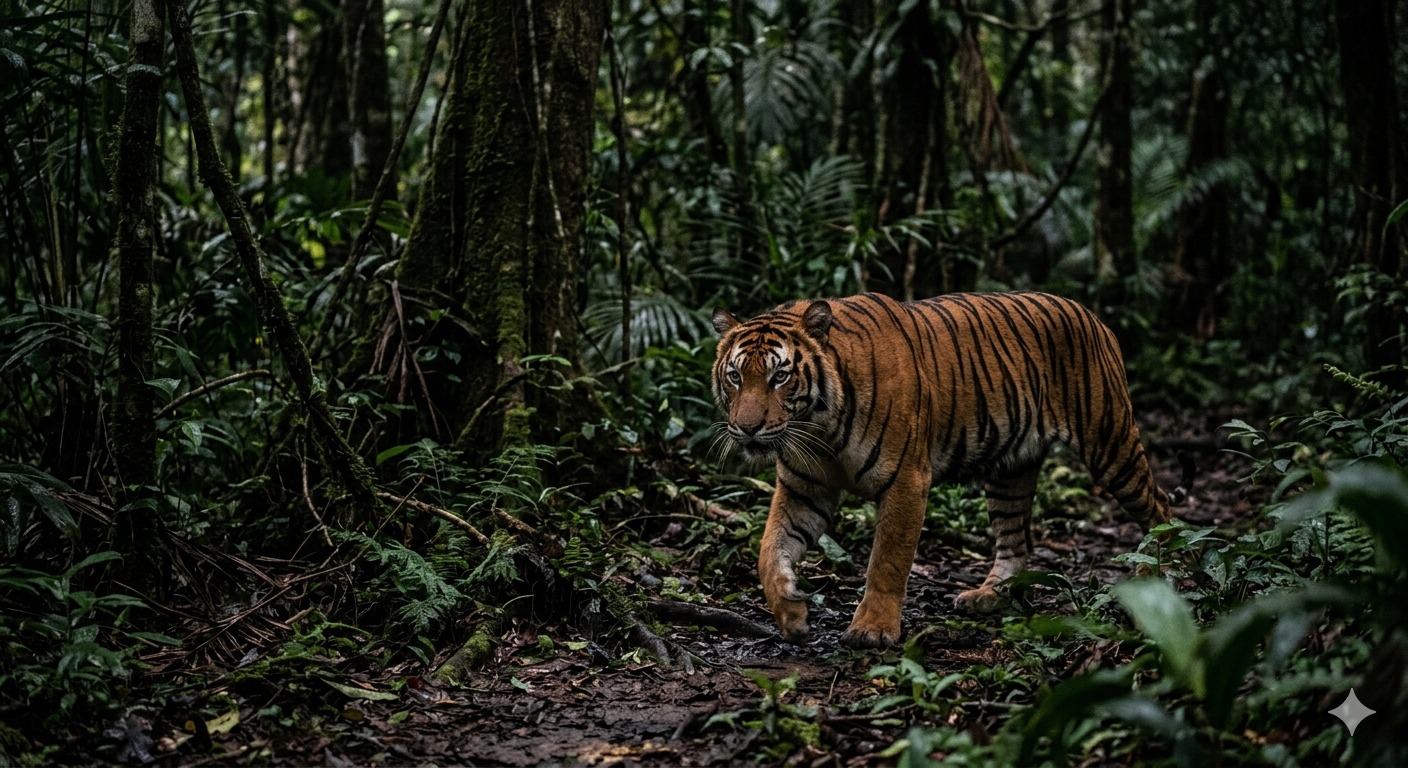
There is a place in northern Sumatra where, if you are patient and a little lucky, you might hear an orangutan call from the canopy above while an elephant moves silently through the undergrowth below, and somewhere — not far, though you will never see it — a Sumatran tiger is watching you. This place is the Leuser Ecosystem, and it is the last on Earth where all four of Sumatra's great megafauna species still share a functioning wild landscape.
Four Species, One Forest
The Sumatran orangutan (Pongo abelii), the Sumatran rhinoceros (Dicerorhinus sumatrensis), the Sumatran elephant (Elephas maximus sumatranus), and the Sumatran tiger (Panthera tigris sumatrae) are all listed as Critically Endangered on the IUCN Red List. In every other landscape across Sumatra and Borneo, at least one of these four has already been lost. Leuser is the exception — and the exception is fragile.
What makes this co-existence ecologically significant is not just the presence of individual animals. It is the functional relationships between them. Each species plays a distinct role in the ecosystem. Orangutans are seed dispersers of exceptional importance — a single individual may carry seeds up to two kilometres from the parent tree, directly shaping the composition of the forest. Elephants are ecosystem engineers: their movement through dense vegetation creates pathways, disturbs soil, and pushes down trees in ways that promote biodiversity. Tigers regulate prey populations, preventing overgrazing that would otherwise degrade the vegetation that all other species depend on. And rhinos — elusive, slow-reproducing, perilously few — are browsers whose feeding habits have shaped the understorey vegetation over millennia.
The Numbers Are Stark
Current population estimates for Sumatra's megafauna make difficult reading. The Sumatran rhinoceros is among the most endangered large mammals on the planet, with fewer than 80 individuals believed to remain across all of Sumatra. The Sumatran tiger population is estimated at between 400 and 600 individuals. Sumatran elephants number in the hundreds across fragmented ranges. Even the orangutan, the most numerous of the four, has seen its population decline sharply over the past two decades as forest loss has accelerated.
In Leuser, our field teams have documented evidence of all four species within a 30-kilometre radius — something that would be impossible anywhere else on the island. Camera traps placed along wildlife corridors have captured tigers, elephants with calves, and orangutans at different times of day and different seasons. Acoustic monitoring stations have recorded sounds consistent with rhinoceros activity in the highland core — a finding that, while requiring further verification, speaks to the presence of habitat that can still support these animals.
Why Corridors Are Everything
The four megafauna do not live in static territories. They move — sometimes vast distances — in search of food, mates, and suitable habitat. A tiger's home range can span hundreds of square kilometres. Elephants follow ancient migration routes passed down through generations of matriarchal knowledge. When forest cover is fragmented by roads, plantations, or settlements, these movements become impossible. Animals become trapped in isolated forest patches that are too small to sustain viable populations. Inbreeding reduces genetic diversity. Local extinctions follow.
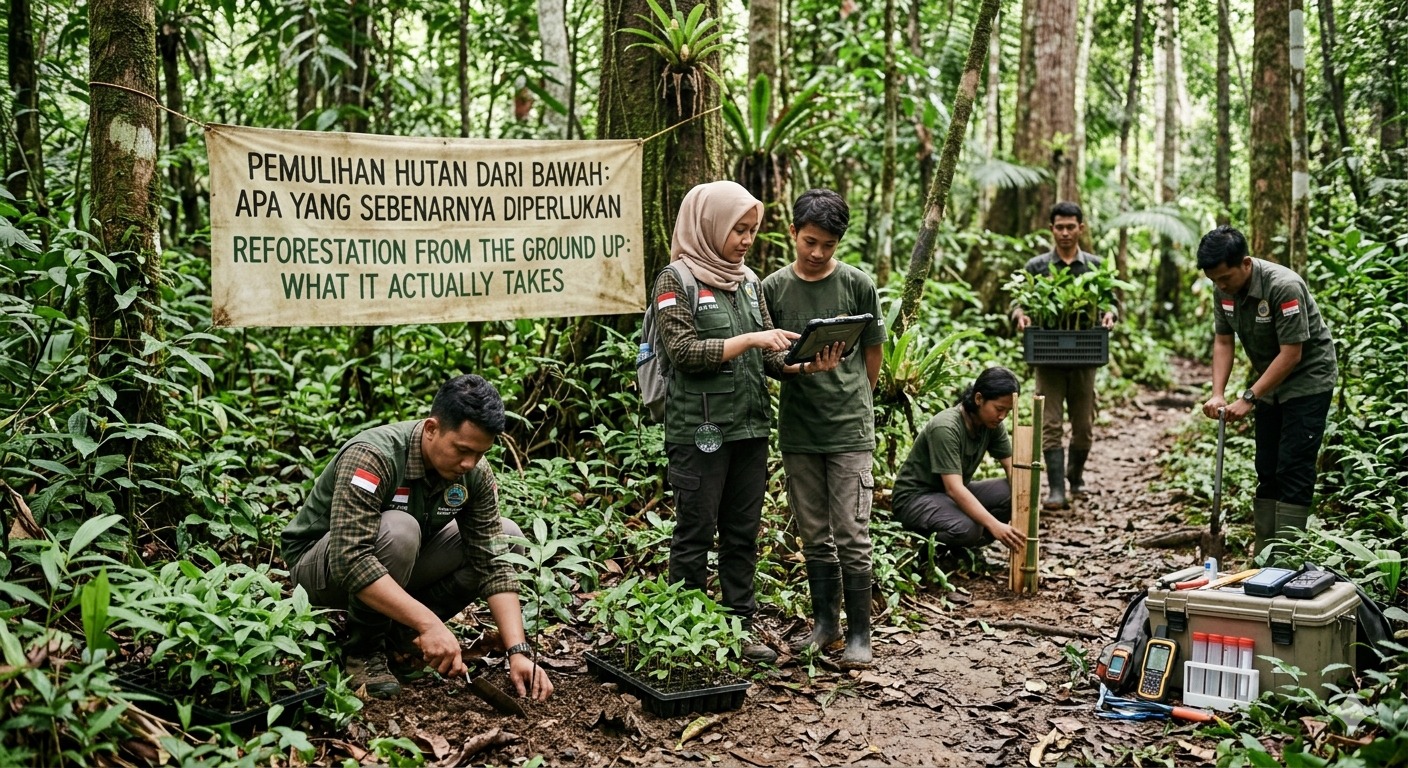
This is why corridor restoration is central to Yayasan KEL's conservation strategy. Reconnecting fragmented habitat patches — even strips of restored forest as narrow as a few hundred metres — can make the difference between a functional wildlife population and a doomed remnant. Our current corridor project in the Takengon buffer zone is designed specifically to link two forest blocks that were separated by agricultural encroachment in the early 2000s. Early camera trap results suggest that both elephants and tigers are already using the restored vegetation.
The Human Dimension
Conservation of megafauna in Leuser cannot be separated from the lives of the people who live at the forest edge. For many communities, these animals are not abstractions — they are neighbours, sometimes unwelcome ones. Elephants raid crops. Tigers take livestock. The costs of living with megafauna fall disproportionately on some of the poorest households in the region.
Yayasan KEL works directly with buffer-zone communities to reduce these conflicts and share the benefits of conservation. Our early-warning systems for elephant movement — using acoustic sensors and community ranger networks — give farmers advance notice to protect their fields before damage occurs. Compensation programs for verified livestock losses help reduce the economic incentive to retaliate against predators. And livelihood programs that connect conservation to income — through eco-tourism, sustainable forest products, and ranger employment — create a direct stake in the forest's survival.
The four species of Leuser's megafauna represent something that cannot be recreated once it is lost. They are the product of millions of years of evolution in a landscape that has been shaped, in turn, by their presence. Protecting them is not just a conservation goal. It is an obligation — to the forest, to the communities that depend on it, and to a future that will judge us by what we chose to save.